
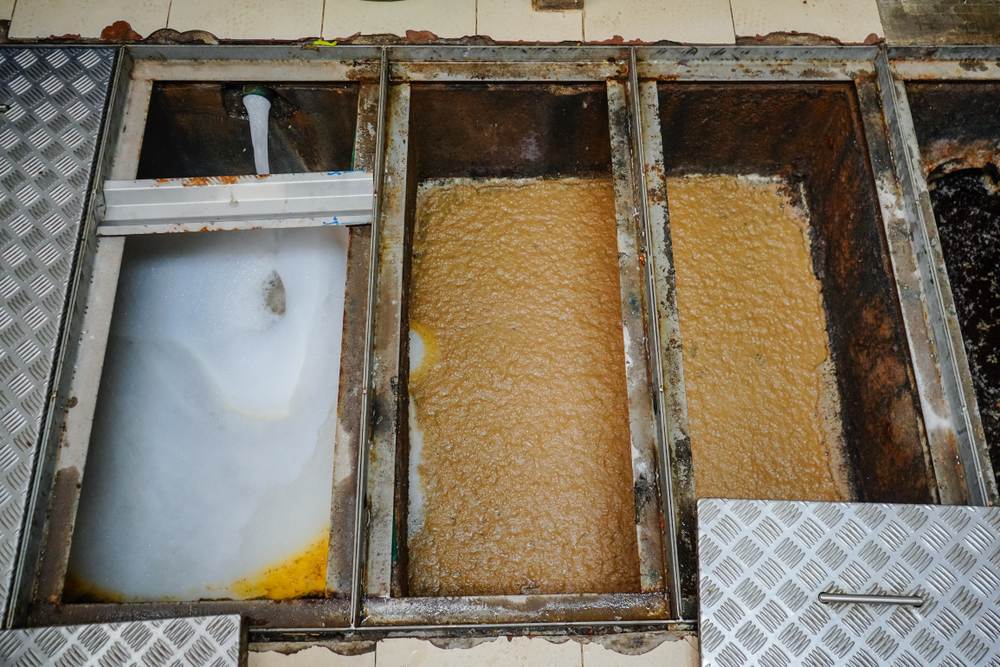
Why Dishwasher Chemical Overuse Destroys Your Grease Trap’s Separation Baffles
For restaurants and commercial kitchens in Saint Bernard, LA, keeping dishes clean is nonnegotiable. But using more dishwasher detergent, degreaser, or other cleaning chemicals than necessary can create a separate problem downstream. Chemicals and emulsified grease entering the waste stream can interfere with the conditions a grease trap relies on to separate fats, oils, grease, water, and solids.
Quick answer: Dishwasher chemical overuse can reduce grease separation by breaking fats and oils into smaller droplets that remain suspended in wastewater longer. Repeated exposure to harsh chemicals may also contribute to premature deterioration of certain grease trap components, including separation baffles, depending on the trap material and chemical involved. For Saint Bernard commercial kitchens, correct chemical dosing and routine grease trap service can help protect the entire system.
What local businesses should know
-
More dishwasher chemical does not necessarily mean cleaner dishes, especially when equipment already uses an appropriate dispensing system.
-
Degreasers and detergents can emulsify grease, making it harder for a grease trap to separate it from wastewater.
-
Commercial kitchens serving Saint Bernard Parish can place substantial daily loads on grease management equipment.
-
Baffle condition matters because baffles help control wastewater movement and support effective separation inside the trap.
-
Chemical use should be considered alongside pumping, cleaning, inspections, kitchen practices, and the condition of the grease trap itself.
Why Does Dishwasher Chemical Overuse Matter in Saint Bernard?
Dishwasher chemical overuse matters in Saint Bernard because a busy commercial kitchen can send repeated doses of detergent, degreaser, hot wastewater, grease, and food residue through the same drainage system every day. That combination can reduce grease separation performance and place unnecessary stress on grease trap components.
Restaurants, cafeterias, seafood kitchens, bars, and other food-service operations throughout Saint Bernard Parish depend on reliable wastewater handling. Businesses around Chalmette, Arabi, Meraux, Violet, and nearby communities can experience costly disruption when grease management equipment stops working as intended.
Safeway Used Oil & Grease works with businesses dealing with used oil and grease management needs. We encourage commercial operators to view the grease trap as part of the kitchen’s operating system rather than something that only deserves attention after drainage problems develop.
What Happens Inside a Grease Trap When Chemicals Are Overused?
Excessive cleaning chemicals can interfere with grease separation by keeping fats and oils dispersed in wastewater instead of allowing them to separate effectively inside the trap. The exact effect depends on the chemicals used, their concentration, wastewater temperature, grease load, trap design, and the condition of the system.
A grease trap needs time and appropriate flow conditions to do its job. Wastewater enters, heavier solids can settle, and lighter fats, oils, and grease can rise. Baffles help direct that flow and limit material from simply moving straight through the unit.
Strong detergents and degreasers can change how grease behaves. Instead of forming a readily separable layer, grease may become dispersed into smaller droplets. That can allow more grease-laden wastewater to move toward the outlet before adequate separation occurs.
How Can Chemical Exposure Affect Separation Baffles?
Chemical exposure can affect separation baffles when the chemical concentration or composition is incompatible with the baffle material, while poor grease separation can also make the baffles less effective at controlling what reaches the outlet. Damage is not identical in every trap, so the baffle material and overall system condition should be inspected.
Baffles are important because they influence how wastewater travels through the trap. A damaged, loose, corroded, deteriorated, or missing baffle can undermine the separation process.
For Saint Bernard food-service businesses, chemical use is only one possible contributor to baffle problems. Age, physical damage, corrosion, poor maintenance, accumulated solids, and unsuitable operating conditions can also contribute.
What Do Local Field Conditions Suggest?
Local grease trap conditions should be evaluated through inspection and service history rather than assumptions about chemical damage alone. Without trap-specific testing or documented service records, it would be inaccurate to claim that dishwasher chemicals caused a particular baffle failure.
In a commercial kitchen, the useful questions are practical ones: What chemicals are entering the drain? How are they dosed? Is the grease trap accumulating material normally? Are the baffles intact? Is excessive grease appearing downstream?
Those observations can help distinguish a chemical-use problem from an undersized, overdue, damaged, or otherwise poorly performing grease trap.
What Warning Signs Can Point to Grease Trap or Baffle Problems?
Grease trap and baffle problems often show up through changes in drainage, odors, grease accumulation, or the physical condition of the trap during service. Saint Bernard restaurant operators should pay attention to recurring symptoms instead of treating every backup or odor as an isolated plumbing problem.
Watch for:
-
Persistent or increasingly strong grease-related odors.
-
Slow drainage from kitchen fixtures connected to the system.
-
Grease appearing where it normally should not be found downstream.
-
Frequent grease-related drain problems despite regular cleaning.
-
Visible deterioration, corrosion, cracks, looseness, or damage around baffles.
-
Unusual grease distribution inside the trap during service.
-
A need for increasingly frequent attention without a clear increase in kitchen volume.
These signs do not prove that dishwasher chemicals are responsible. They indicate that the grease management system deserves closer evaluation.
When Should a Saint Bernard Business Call a Professional?
A Saint Bernard business should arrange professional grease trap service when recurring drainage problems, excessive accumulation, unusual odors, downstream grease, or visible component deterioration appears. Staff can monitor chemical use and obvious warning signs, but internal grease trap condition and waste removal are better handled as part of proper professional service.
Kitchen managers can safely review product dosing instructions, check automatic dispensers, train employees not to add unnecessary chemical, and maintain basic service records.
Opening, pumping, cleaning, or evaluating a commercial grease trap may involve hazards and waste-handling considerations. Professional service also provides an opportunity to see what is actually accumulating inside the unit.
What Common Conditions Make the Problem Worse?
The conditions most likely to worsen grease separation problems are excessive chemical dosing, heavy grease loading, high wastewater volume, poor maintenance, and damaged trap components. In busy Saint Bernard Parish kitchens, several of these factors can occur at the same time.
-
Excessive detergent or degreaser use: More chemical can increase grease emulsification without providing a corresponding cleaning benefit.
-
Heavy kitchen grease loads: Frying, grilling, food preparation, and dishwashing can continuously introduce fats and oils.
-
Poor solids control: Food debris entering the drainage system consumes grease trap capacity.
-
Delayed grease trap service: Accumulated grease and solids reduce the working volume available for separation.
-
Damaged baffles: A compromised baffle can change flow through the trap and reduce effective separation.
How Can Restaurants Protect Their Grease Trap Baffles?
Restaurants can protect grease trap performance by controlling chemical dosing, keeping grease and food solids out of drains when possible, and maintaining an appropriate inspection and service schedule. Prevention is particularly valuable for busy kitchens in Chalmette and surrounding Saint Bernard Parish communities where downtime can interrupt daily operations.
Follow the dishwasher chemical manufacturer’s dosing requirements rather than assuming more product will improve results. If the kitchen uses automatic dispensing equipment, make sure employees do not routinely supplement it without a documented reason.
Scrape food waste before washing, keep used cooking oil out of drains, and monitor grease trap service needs. During professional service, ask about the condition of accessible internal components, including baffles.
DIY maintenance should stop before employees attempt to handle accumulated grease waste or work inside equipment that presents safety risks.
What Results Should Proper Maintenance Produce?
Proper maintenance should support more consistent grease separation, preserve usable trap capacity, and make developing component problems easier to identify before they become severe. Results depend on the trap design, kitchen volume, grease load, chemical practices, and existing equipment condition.
Correcting chemical overuse cannot repair a baffle that is already physically deteriorated. Likewise, pumping alone cannot solve an operating practice that continually sends excessive grease or chemical into the system.
The best results come from addressing both the equipment and the kitchen practices affecting it.
What Chemical-Use Mistakes Should Saint Bernard Kitchens Avoid?
Saint Bernard kitchens should avoid treating extra chemical as a substitute for correct dosing, grease control, and grease trap maintenance. A better approach is to control what reaches the drain and address the source of recurring grease-management problems.
Mistake: Adding extra degreaser whenever drains seem greasy.
Consequence: Additional chemical may disperse grease rather than correct the underlying accumulation problem.
Better approach: Determine whether the drain or grease trap needs service.
Mistake: Assuming a strong chemical will eliminate the need for pumping.
Consequence: Grease and solids still have to be managed appropriately.
Better approach: Maintain a service schedule based on actual system conditions.
Mistake: Ignoring damaged baffles because wastewater still flows.
Consequence: Flow does not necessarily mean the trap is separating grease effectively.
Better approach: Have deteriorated components evaluated.
What Is a Common Local Scenario?
A common Saint Bernard commercial-kitchen scenario involves staff increasing degreaser or detergent use to address greasy equipment or recurring drain concerns without checking the grease trap first. This can mask the underlying maintenance issue while increasing the chemical load entering the wastewater stream.
Imagine a busy Chalmette kitchen experiencing slower drainage. Employees begin using additional cleaning chemical because it seems like a quick solution. The drain temporarily appears manageable, but the trap remains heavily loaded or has an internal component problem.
This is a representative scenario, not a Safeway Used Oil & Grease case study. The better response is to evaluate chemical practices and grease management together.
Which Services Help Address These Problems?
Grease trap cleaning and waste grease management help businesses remove accumulated material and identify conditions that may be affecting grease separation. For Saint Bernard Parish food-service operations, routine attention can also make it easier to spot damaged or deteriorating components during service.
Our role is to help local businesses manage used oil and grease responsibly while reducing avoidable operational problems.
Is DIY Monitoring or Professional Service the Better Option?
DIY monitoring is useful for everyday chemical control, while professional service is the appropriate choice for removing accumulated grease and evaluating internal grease trap conditions. These approaches work together rather than replacing one another.
Kitchen staff can monitor detergent use, scrape dishes, keep cooking oil out of drains, and document recurring odors or drainage changes. Professional service addresses accumulated waste and provides a closer look at the trap’s condition.
If a baffle appears damaged, simply changing dishwasher detergent will not restore the component.
Where Do We Serve Around Saint Bernard?
Our local service focus includes Saint Bernard and businesses throughout the surrounding parish and nearby communities. Depending on service availability, businesses in areas such as Chalmette, Arabi, Meraux, and Violet can contact us to discuss their used oil and grease management needs.
Local commercial kitchens can also ask whether their location falls within our current service area.
What Can Happen If You Ignore Poor Grease Separation?
Ignoring poor grease separation can allow an existing maintenance or equipment problem to worsen, potentially contributing to recurring drainage issues, odors, increased service needs, or grease moving farther through the wastewater system. For a Saint Bernard restaurant, those problems can interfere with kitchen operations and create avoidable maintenance costs.
Chemical overuse should therefore be treated as an operating issue, not as a shortcut for grease control.
FAQ
Can too much dishwasher detergent damage a grease trap in Saint Bernard?
Too much dishwasher detergent can interfere with grease trap performance, particularly when it contributes to emulsification of fats and oils in wastewater. Whether it physically damages the trap depends on the detergent chemistry, concentration, trap materials, temperature, and exposure. A professional inspection is appropriate when internal deterioration is suspected.
Do degreasers dissolve grease inside a grease trap?
Degreasers can disperse or emulsify grease rather than make the grease management problem disappear. That distinction matters because finely dispersed grease may remain in wastewater longer and become harder for the trap to separate effectively. Saint Bernard Parish kitchens should control grease at its source instead of relying on chemicals as disposal tools.
How do I know whether my grease trap baffles are damaged?
Visible deterioration, corrosion, looseness, missing sections, abnormal flow, or unexpected downstream grease can justify closer inspection of the baffles. Those symptoms can have multiple causes, so Saint Bernard businesses should avoid assuming chemical damage without examining the trap’s overall condition, maintenance history, and operating practices.
Can I fix grease trap problems by using less detergent?
Reducing excessive detergent may improve operating conditions, but it cannot correct every grease trap problem. A heavily loaded trap, damaged baffle, solids buildup, or another physical problem may still require service. Businesses around Chalmette should combine correct chemical dosing with appropriate grease and solids management.
How often should a Saint Bernard restaurant’s grease trap be serviced?
The appropriate service interval depends on grease accumulation, solids loading, trap size, kitchen volume, operating practices, and applicable local requirements. A single schedule is not accurate for every Saint Bernard restaurant. Service history and actual trap conditions are useful for establishing a practical maintenance frequency.
Should employees pour used cooking oil into a grease trap?
No, used cooking oil should not be intentionally poured down a drain as a grease-management strategy. Keeping bulk cooking oil separate reduces unnecessary loading on the drainage and grease interception system. Saint Bernard food-service businesses should use an appropriate used-oil collection process instead.
Can hot dishwasher water cause grease trap problems?
Hot wastewater can temporarily keep fats and oils more fluid, but temperature is only one part of grease trap performance. Chemical concentration, grease load, flow, trap design, solids accumulation, and maintenance also matter. Arabi, Meraux, and Chalmette kitchens should evaluate the entire operating pattern when problems recur.
Is a slow kitchen drain always caused by the grease trap?
No, a slow kitchen drain can have several causes and does not automatically mean the grease trap is responsible. Accumulation in piping, solids, grease loading, equipment condition, or other drainage issues may be involved. Repeated symptoms warrant proper evaluation rather than continually adding stronger cleaning chemicals.
Protect Your Saint Bernard Kitchen From Avoidable Grease Problems
Chemical control and grease trap maintenance work best together. By using cleaning products as directed, limiting grease and solids entering drains, and addressing trap problems when warning signs appear, local food-service businesses can support more reliable grease separation and reduce unnecessary disruption.
Keep Your Grease Management System Working as Intended
We help Saint Bernard area businesses address used oil and grease management needs with practical service focused on keeping commercial operations moving.
Categorised in: Grease Trap Service