
5 Signs Your Restaurant Needs More Frequent Grease Trap Cleaning
Running a restaurant is no small feat. Between managing staff, sourcing ingredients, satisfying customers, and keeping up with health codes, the operational demands never seem to stop. One task that often gets pushed to the back burner is grease trap maintenance. Many restaurant owners schedule their grease trap service on a fixed calendar cycle and assume that is enough. But the truth is, every kitchen operates differently, and a one-size-fits-all schedule may not be cutting it for your establishment. If you have been relying on a routine that was set up years ago and never revisited, it might be time to take a closer look at what is actually happening inside your grease trap.
Grease traps are designed to intercept fats, oils, and grease before they enter the municipal sewer system. When they are not serviced often enough, the consequences range from unpleasant odors to full-blown plumbing disasters and health code violations. Knowing the warning signs that your current grease trap service schedule is falling short can save you thousands of dollars in repairs and protect your restaurant’s reputation.
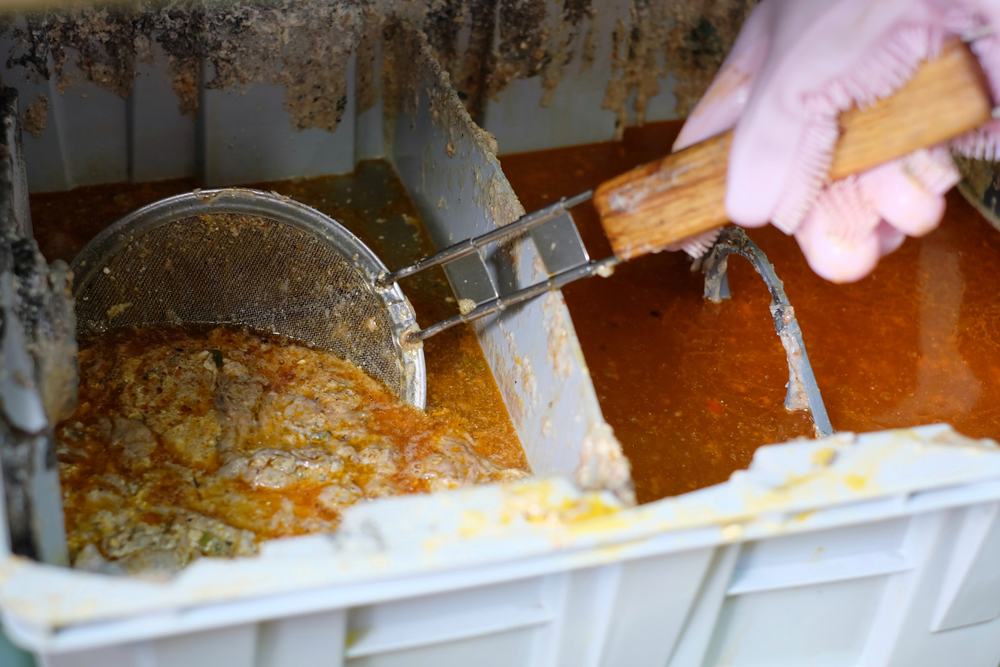
1. Persistent and Worsening Drain Odors
One of the earliest and most noticeable signs that your grease trap needs more frequent attention is a foul smell coming from your drains. When a grease trap fills beyond its capacity, the decomposing organic matter inside begins to produce hydrogen sulfide gas, which carries a strong odor resembling rotten eggs or sewage. This smell does not stay contained in the back of the house. It travels through your kitchen, into the dining area, and sometimes even out onto the street.
Some restaurant owners assume that drain odors are just part of running a busy kitchen, but that assumption can be costly. Customers who encounter unpleasant smells during their dining experience are unlikely to return, and they are very likely to leave a negative review online. If your cleaning crew has been masking the odor with deodorizers rather than addressing the root cause, that is a clear signal your grease trap service frequency needs to be increased. A properly maintained grease trap should not produce significant odors between service visits. If yours is, the interval between cleanings is simply too long.
2. Slow Draining Sinks and Floor Drains
Another telltale sign is sluggish drainage throughout your kitchen. When a grease trap is nearing or at capacity, water and waste have difficulty passing through efficiently. You may notice that your prep sinks drain more slowly than usual, or that standing water accumulates on the floor near drains after a busy service. Some operators mistake this for a simple clog somewhere in the line and call a plumber, only to discover that the real issue is a grease trap that is overdue for cleaning.
Slow drains are more than just an inconvenience. They create unsanitary conditions that can attract pests and bacteria, and they slow down your kitchen operations during service. If your staff is constantly working around pooling water or waiting for sinks to drain before continuing food prep, productivity takes a hit. Scheduling more frequent grease trap service appointments can resolve the underlying issue and keep water flowing freely through your entire drainage system.
3. Grease Backup or Overflow
If you have ever walked into your kitchen and found grease backing up into sinks, floor drains, or even bubbling up from clean-out access points, that is a serious emergency signal. Grease backup is what happens when a trap has been neglected far too long and can no longer hold additional waste. At that stage, fats and oils have nowhere to go but back up through the plumbing system, creating an unsanitary and potentially dangerous mess throughout your kitchen.
Beyond the immediate cleanup costs and operational disruption, a grease backup can result in fines from your local health department or sewer authority. Many municipalities take grease discharge violations very seriously because fats, oils, and grease are one of the leading causes of sanitary sewer overflows. A single incident of backup is a strong indicator that your grease trap service schedule needs a serious overhaul. Do not wait for a second occurrence before taking action. Increasing the frequency of professional cleanings is far less expensive than the fines, emergency service fees, and reputational damage that come with an overflow event.
4. Failed Health Inspections or Inspector Warnings
Health inspections are a regular reality for any food service establishment, and grease trap compliance is frequently on the inspector’s checklist. If your restaurant has recently received a warning, a citation, or a failed inspection related to your grease management system, that is a direct and unambiguous message that your current grease trap service routine is not adequate.
Health inspectors are trained to look for signs of neglect, including grease buildup around trap access lids, evidence of past overflows, and a maintenance log that does not reflect sufficient servicing intervals. In many jurisdictions, restaurants are required to maintain documentation of every grease trap cleaning, including the date, the service provider, and the volume of waste removed. If your logs show long gaps between service visits, inspectors will flag it. Even if you have not yet received a formal citation, a verbal warning from an inspector during a routine visit should be treated as a serious prompt to increase your service frequency before the next inspection comes around.
Partnering with a reliable grease trap service provider who keeps detailed records and follows local compliance guidelines can make a significant difference during inspections. It demonstrates to the health department that your establishment is proactive about sanitation and committed to maintaining a clean and compliant operation.
5. Your Kitchen Volume Has Increased Significantly
Sometimes the issue is not that something has gone wrong, but rather that your business has grown. If your restaurant has expanded its hours, added catering services, launched a ghost kitchen operation, increased seating capacity, or simply gotten busier due to growing popularity, the amount of grease and waste flowing through your system has increased proportionally. Yet many operators fail to update their grease trap service schedule to reflect that change in volume.
A grease trap that was adequately serviced on a quarterly basis for a low-volume kitchen may need monthly or even bi-weekly cleanings to keep up with a high-volume operation. The general rule of thumb used by many grease trap professionals is that a trap should be pumped out when it is 25 percent full of grease and solids. If your kitchen output has doubled or tripled since your service schedule was last set, there is a very good chance you are reaching that threshold much sooner than your current appointments account for.
Review your kitchen output, the types of food you are preparing, and the volume of frying and grease-heavy cooking your team performs on a daily basis. Share that information with your grease trap service provider and ask them to reassess the appropriate service interval for your current level of operation. A proactive adjustment now can prevent a long list of problems down the road.
Conclusion
Your grease trap is one of the most important and most overlooked components of your restaurant’s infrastructure. Ignoring the warning signs of an overdue cleaning does not make the problem disappear. It compounds it. Foul odors, slow drains, backups, failed inspections, and increased kitchen volume are all clear indicators that your current grease trap service schedule is no longer working for your business. Paying attention to these signs and responding with more frequent professional cleanings is one of the simplest ways to protect your kitchen, your reputation, and your bottom line.
Need Grease Trap Services Near You?
Categorised in: Grease Trap Cleaning